The House is currently decorated and arranged to reflect how it may have looked and functioned in Varnum’s time, with occasional nods to the families who lived in the house in later years. Key rooms of the Varnum House Museum include:
Music room, with its late-18th-century pianoforte
Keeping room with its magnificent fireplace used for cooking
Lafayette room, in which the Marquis De Lafayette stayed while visiting Varnum
General Varnum’s bed chamber, which houses some our earliest artifacts, including Varnum’s campaign desk
General Varnum’s Chamber
General Varnum’s chamber houses some of the most unique items in the museum. General Varnum’s Revolutionary War campaign desk, with its Society of the Cincinnati symbol escutcheons (added at a later date) features a removable pocket watch. The officer’s chair, designed to accommodate an officer’s sword and coattails, one of the oldest items in the museum, is from the 1690s.
Keeping Room
Perhaps the heart on any colonial of early American house, the keeping room was in use from early morning on. Its large fireplace was used for cooking; other activities like spinning, preserving, dining and mending were relegated to this room as well. Over the hearth are examples of rare Rhode Island redware. The musket and powder horn, while not typical keeping room furnishings, was found in the Varnum House; components of it date to the 1750s.
Music Room
A fine and rare pianoforte dominates one of the two parlors. The pianoforte was made by William Fricker of London and dates to 1797. It is one of only six known to exist today. A selection of fifes is also on display in the music room, as are portraits and other trappings of 18th-century life.
Lafayette Room
The Lafayette Room pays homage to the Marquis de Lafayette, who joined the American cause and became a General in the Continental Army. He and General Varnum became friends while encamped at Valley Forge. Lafayette visited Varnum at his home on multiple occasions; on one such visit in 1778, Lafayette presented the Varnums with a miniature punch bowl, which is displayed in the Lafayette Room.
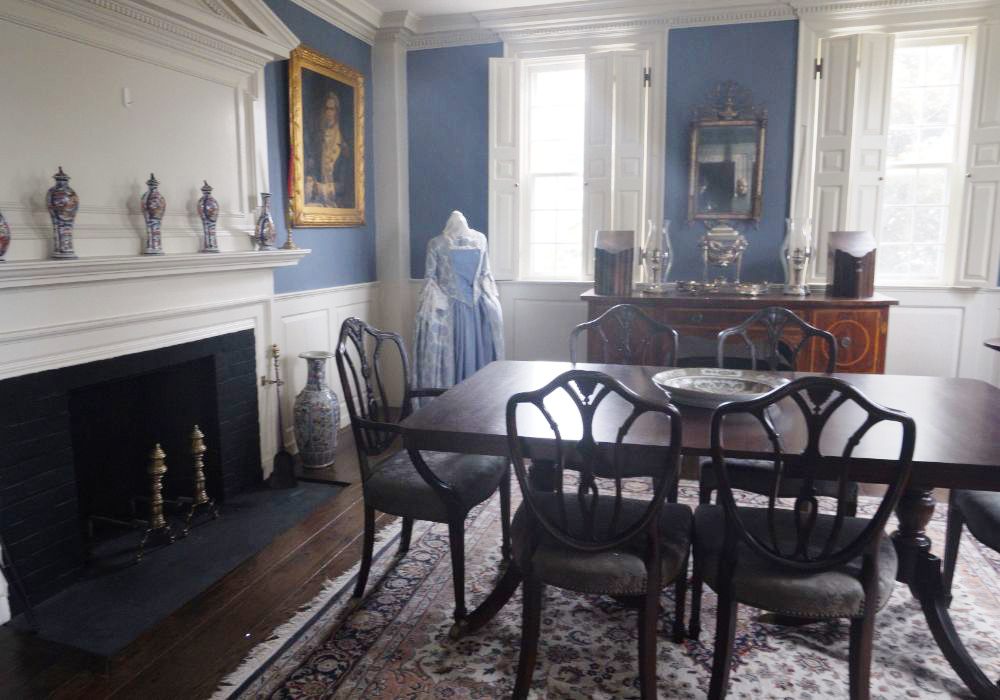
Dining Room
Easily the most elegant room in the Varnum House, the dining room features fine architectural details. Dentil molding, wainscotting, and a grand pedimented fireplace complement what was Varnum’s original law office. The room has a view of the Courthouse and Bay, allowing Varnum to keep tabs on local happenings.
Mrs. Varnum’s Chamber
Named in honor of Varnum Continentals’ founder H.V. Allen, who recognized the importance of Varnum’s house and helped preserve it for generations to come, this room is currently thought to have been Mrs. Varnum’s chamber. Its furnishing include China import items, a nod to Rhode Island’s China Trade in the 18th and 19th centuries. Key items include reverse paintings on glass imported from China and other chinoiserie.
Study and Law Office
One can easily imagine law clerks hard at work, gaining practical experience while preparing for the bar. This spacious room is home to an imposing desk, originally owned by John Brown, statesman, merchant, and slave trader in America’s founding years. Brown and Varnum differed vastly in their politics and beliefs, including those regarding slavery.